Showing posts with label professional dress. Show all posts

Tuesday, April 19, 2016

Building a Professional Wardrobe

By Lindsey Shanck, Toppel Peer Advisor

When a student lands their first internship or job, it can be extremely stressful building a professional wardrobe. It is hard knowing where to start and it can also be costly; however, with the right approach, it doesn’t have to be! With the right pieces, it should be easy to dress professionally every day.

1. Stick to basic colors.


In the picture above, there is a common theme. Blue, black and white are colors that go with everything and can be mixed and matched with other patterns and colors, saving money. When choosing blazers, pants, and button downs, make sure you have these staples before venturing to other colors.

2. Invest in two pairs of good shoes.

Play it safe with shoes, and find a nice pair of black pumps and beige pumps for women and black and brown leather loafers for men.

3. Make sure you match!


The basic rule is to pair black with black, and beige and brown with blue. Grey can be mixed with both, but will look better with black, unless the grey has brown undertones like the man’s pants seen above.

4. Accessorize. But keep it to a minimum!


It can be hard to show your personality through professional dress, but a few accessories go a long way. A necklace and fun purse and a watch a nice briefcase are all you need.

5. Looking professional is more than the clothes you are wearing.

It is important to make sure your hair is groomed, your clothes are clean, and it doesn’t look like you just rolled out of bed! While you should take it easy on cologne or perfume, make sure you look presentable!

Thursday, February 6, 2014

Look Good, Be Thrifty

By Alysha Gomes, Toppel Peer Advisor

Too often, students spend their arm and leg on an outfit or two. Being in Miami, advertisements about the next big thing created by your favorite designer lurk around every corner.  It seems impossible to look the part without paying full price and upfront.  Well, I’m writing to tell you that’s not the case. There are plenty of resources and trade secrets that help keep your money in your wallet where it belongs.


http://artofbeingcheap.com/wp-content/uploads/2013/06/1.jpg


While at the store:

1. Don’t be Specific
Sometimes it is difficult to shop for specific items at stores such as Ross and Marshalls; however, if you limit your search you will miss out on all the other amazing deals they have.

2. Shop Often & Early
To discover the best deals you need to show up before everyone else does. Often stores do not know when they will get a shipment in or what will be in it. A lazy afternoon could turn into a night out with a brand new dress or suit.

3. Practice the Buddy System
Bringing a friend or two gives you extra eyes to spot fabulous clothing. 


http://cdn.abclocal.go.com/lwhd/images/2009/deals/8959411_600x338.jpg

4. Don’t be Afraid to be thrifty
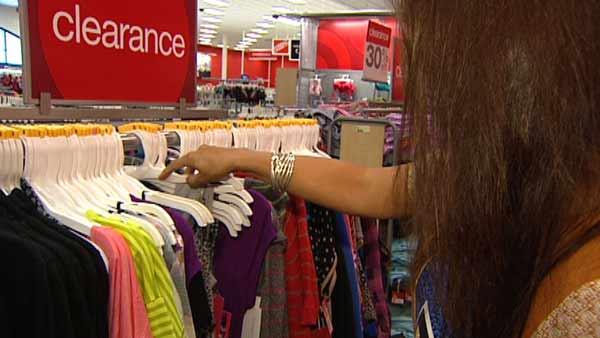
The clearance section holds awesome deals that a lot of people miss out on. Don’t spend your life’s savings on looking good. Simply be alert and know how to get the best deals. You can easily spend $200 on an appropriate business attire outfit, which was demonstrated in Toppel Career Center’s “Work It” Fashion Event on Wednesday, February 5th; however, you could bargain and cut that price in half.

Tuesday, December 3, 2013

The Art of Tying a Tie


By Kayla Lott, Toppel Ambassador

For some reason, it seems in our society today, the art of tying a tie is slowly being lost.  I didn’t even notice it until one of my male friends brought it up to me the other day.  Maybe it’s because we have become busier or lazier; however, regardless of the answer, less and less people, and that goes for men and women, know how to tie a tie.  But don’t fret!  Learning how to tie a tie can be simple, easy, fast and fun, and if you don’t feel that way, you should learn anyway.

Step 1: Start off with the tie under your collar and evenly hanging. 

Note: The smaller end of the tie should essentially be stationary throughout this process, hanging in the middle of your body.

Step 2: Take the side of the tie with the wider end and cross it over the smaller side making an x.  

Step 3: Cross the wider end of the tie under the smaller end so that it makes a one sider t.

Step 4: Wrap or cross the wide part across the front of the smaller end.

Step 5: Pull the wide part up the back and through the loop in the front.

Step 6: Tighten and adjust.

Congratulations!  You have now learned how to tie a tie!  You no longer have to put on a clip-on or have your roommate do it for you, and if you didn’t understand any of the steps, that’s okay.  There’s a picture here that will show you how to do it.  


Happy tie tying!
 

Friday, November 15, 2013

A Message to My Fashionistas


By Kayla Lott, Toppel Ambassador

When I heard the words “business professional,” I used to hyperventilate.  One of the ways that I—as well as many others—express myself is through my style, and dressing business professional takes away from that completely…or so I used to think. 

Stereotypically, when people think business professional, they think all black, all basic and all boring, but it doesn’t have to be that way.  There are ways that we can express ourselves through our clothing that don’t have to be distracting or take away from our aptitude as young professionals.

So how exactly do we do that? 

For men, feel free to experiment with ties!  That doesn’t mean to wear your new Miami Dolphins tie; however, don’t shy away from patterns and colors (other than red and blue).  Also, experiment with different styles of ties.  The typically worn tie (aka the four-in-hand) is great, but there is also the bow tie that many don’t venture off to do, and there are other alternative ways to tie a tie (like the trinity or eldredge knot) that would give you a unique style as well.


Furthermore, take advantage of this great accessory called the vest.  It’s a nice change from the jacket, and the vest is something that generally looks good on all men.  A sweater, like the vest, is another great deviation from the norm.   Color is another thing that not enough men take advantage of.  The colors of the American flag aren’t the only colors that you can wear to the office, and pink—as well as purple—isn’t just a “girl color.”  Haven’t you heard that real men wear pink?

For women, there’s a lot that we can do.  High-waisted pants and skirts are in right now.  Feel free to wear them as long as the length is appropriate (at least knee-length).  Plus, it’ll give you more of an hourglass look.  Moreover, play around with accessories.  It’s okay to wear more than the pair of go-to studs you have sitting next to your business suit.  Pearls are a great accessory to enhance your outfit while also making you look elegant, as long as you wear them in moderation.  Don’t be afraid of earrings that dangle, just make sure they say business but fashionable not I’m going to the club after work.  Less is more is definitely a foundation to live by on wearing accessories in the work place, but think of less as modest not as sparing.


On the topic of the club, be careful of the heels you wear.  Many advise to keep heels to a half an inch, but this is 2013, and we’re fashion-forward young ladies.  Most of us probably don’t own a pair of heels that are less than three inches.  As long as they’re not too strappy, too high (five to six inches, four may be pushing it) and preferably close-toed, feel free to strut your stuff.  Lastly, lack of color isn’t just an issue for the men.  It’s okay for us to wear color too.  Wear that magenta colored skirt or the gold flats or both.  Fashion-forward isn’t just for the fashion merchandising majors.  It can be for us too.

So the next time you hear “business professional,” keep calm and style on because style is something that gives you the freedom to be who you are even when you are part of a unit.  When everyone else looks the same, it helps us to define ourselves as someone who is different, unique and divergent.  It’s something that can go from being a conversation starter to getting us a job, so don’t be afraid to wear that argyle tie or that chunky gold necklace.  It may be the very catalyst to get you your next connection.

Tuesday, October 1, 2013

What to Wear


By Maura Gergerich, Toppel Peer Advisor

One crucial part to landing that dream job is being able to look the part. If you ever plan on attending any sort of recruitment function someone will always say dress is business casual or business professional. But, what exactly does this mean and what is the difference between the two?


Business Professional

This is the most formal business attire. For men, this means to wear a dark colored suit (solid or pinstripe is fine) with a solid color, clean, pressed, shirt. A conservative tie should be worn (save the funky retro patterns for elsewhere) and make sure that you wear shined, dark dress shoes that coordinate appropriately with your suit (brown shoes with a black suit is a major fashion faux pas). Socks should reach over the calf so sorry, but this is not the time to show off your ankles with your low cut athletic socks, and just like shoes, should match the rest of your outfit. Avoid flashy accessories like cufflinks or earrings (hopefully you know not to wear a necklace with a tie) and one ring per hand if any. Women should also whip out that power suit (pant or skirt) or you can also wear a tailored dress in a subtle color. For any outfit, avoid extreme slits and low necklines and keep hemlines to the knee. Polished, closed toe shoes with a back and low heel (if any) should be worn as well as appropriately colored stockings. Keep nails clean with no chipped polish and keep makeup and jewelry light. Both men and women should know to wear conservative colors (grey, navy, black), keep perfume and cologne light, and remember to keep those breath mints handy (no gum; you don’t want to forget to throw it out and be chewing like a cow at your interview). 


Business Casual

A basic outfit is khakis and a button up shirt, which is appropriate for men and women. More specifically, for men, ties are not necessary but when in doubt, wear one. You can always discreetly remove it if you are uncomfortably overdressed. Long sleeve shirts are slightly dressier than short sleeve but either are acceptable and you can even go for a light pattern (paisley is probably too bold but a subtle pinstripe always looks dapper). Slacks or khakis are your go to choices for pants and wear nice shoes. For women, both slacks and a pencil skirt are appropriate (neither should be skin tight) and should be paired with a blouse. Sweaters are an optional component of your outfit; just remember that your top should not be tight or show cleavage. The smartest option for shoes would be flats but sandals that are not too casual and have a back can also be worn. If you ever question how formal you should dress it is better to go with a more formal option rather than a more casual one. You usually won’t stand out for being dressy but wearing a polo in a room full of people in suits will make you stick out like a sore thumb.
It’s not shallow to say that looks are important to an employer while they’re looking to hire. You wouldn’t want to hire someone for a position if they show up looking sloppy and unkempt, right? You represent your employer when you go out into the workforce so how well you dress is a direct reflection on your boss. Your first impression in an interview is going to be made before you even open your mouth so it’s super important that you show off your professional attitude on the exterior as well as in your answers.